
APPG Meeting with SME Housebuilders: October Parliamentary Roundtable
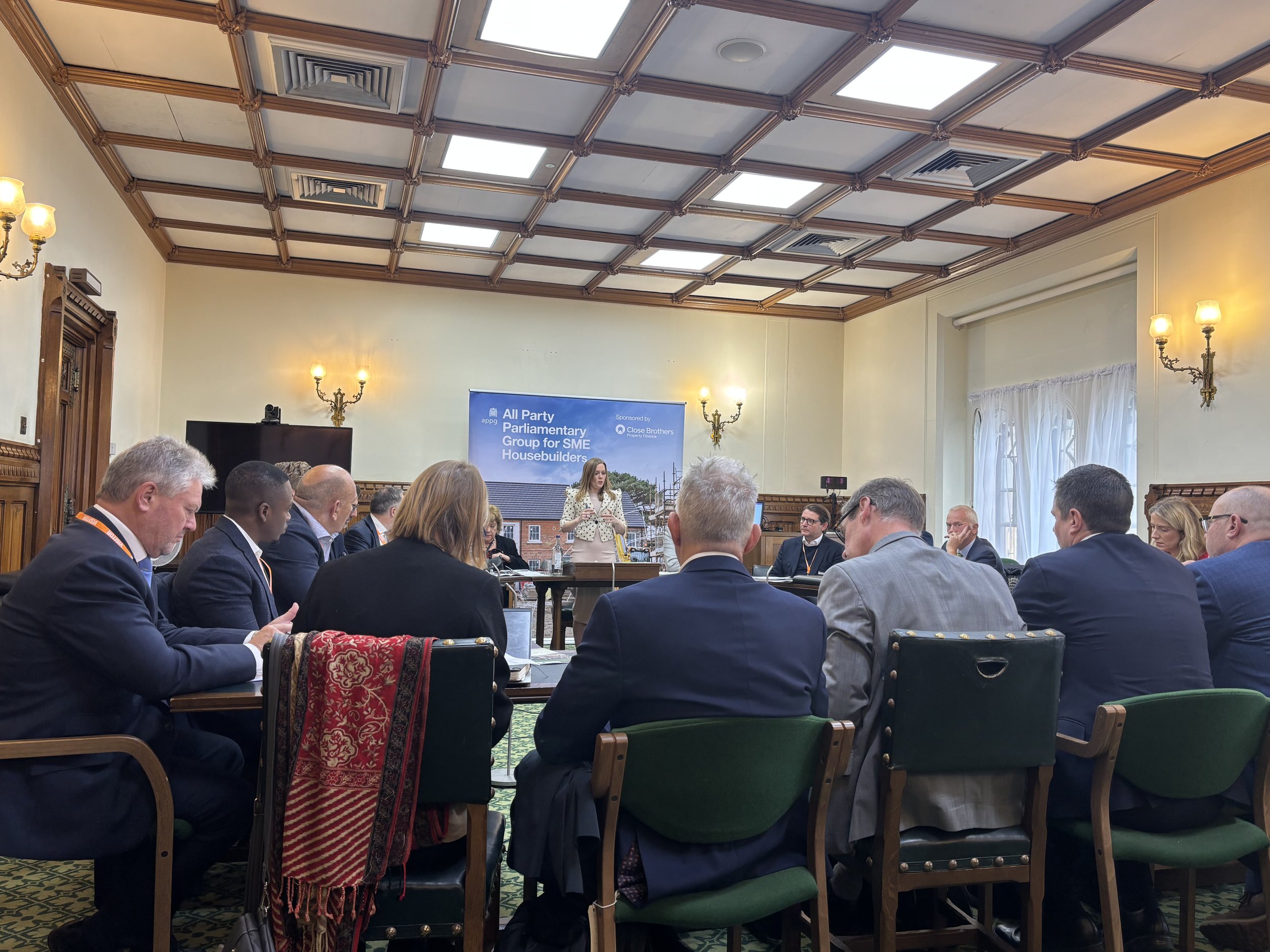
APPG event in Committee Rooms in the Palace of Westminster.
In October, the APPG convened a parliamentary session bringing together SME housebuilders, MPs from across the House, and senior stakeholders to discuss the findings of a bespoke research survey of 135 SME housebuilders. The meeting was attended by 20 housebuilding companies, alongside special advisers to housing ministers, reflecting strong cross-party and government interest in the challenges facing the SME sector.
The meeting was chaired by Sarah Edwards MP alongside Edwin De Silva. Sarah Gibson MP (Liberal Democrats) was also in attendance, alongside special advisers to housing ministers and representatives from across the SME housebuilding sector. Close Brothers were present as part of the wider industry discussion. Baroness Taylor joined the meeting and spoke on the critical role SME housebuilders play in housing delivery, competition and regional economic growth.
The roundtable focused on the findings of a steering group–led research programme designed to capture the operational realities facing SME housebuilders and identify targeted policy solutions.
Key Issues Raised by SME Housebuilders
1. Demand-side stimulus
The research highlighted the absence of effective demand-side support as the most critical issue for SME housebuilders. Evidence shows it would take the average first-time buyer in London 31 years to save for a deposit, with only one in ten able to purchase without family support. SME respondents stressed that the market urgently requires stimulus through an equity support mechanism, with 55% identifying this as a critical issue.
2. Biodiversity Net Gain (BNG)
Biodiversity Net Gain requirements were identified as a significant barrier to SME delivery, with 94% of respondents experiencing planning delays linked to BNG compliance. SMEs reported disproportionate cost impacts, delays caused by land sourcing and funding requirements, and challenges that actively deter new entrants to the market. 58% of respondents highlighted BNG as a critical issue.
3. Hold-ups in Section 106 affordable housing
Delays in Section 106 negotiations and delivery are creating blockages in SME development. Local authorities report average negotiation times exceeding 12 months, while completed affordable homes remain unsold due to the absence of contracts with Registered Providers. Respondents highlighted dysfunction in the system, with 32% identifying this as a critical issue.
4. Section 106, Section 278 and CIL requirements
SMEs raised concerns about inconsistent and excessive requirements relating to Section 106, Section 278 and Community Infrastructure Levy payments. Delays in highways adoption and escalating costs were cited as major contributors to uncertainty and viability pressure. 51% of respondents identified this as a critical issue.
5. Landfill tax proposals
Proposed increases to Landfill Tax were identified as a material threat to scheme viability. Evidence presented suggests that a 3,000% increase could add up to £28,000 per home, with respondents warning that such increases would render many SME schemes unviable. 24% of respondents highlighted this as a critical issue.
6. Nutrient Neutrality
Nutrient Neutrality requirements are adding up to £25,000 in additional costs per new home, creating significant viability pressures for SME developments. Respondents highlighted the lack of proportionate application on smaller sites and the need for reform informed by practical delivery experience. 22% of respondents identified Nutrient Neutrality as a critical issue.
7. Building Safety Levy
SME housebuilders raised serious concerns about the impact of the Building Safety Levy, with 54% stating it will be a major barrier to increasing delivery in the next 12 months. While intended to remediate unsafe high-rise buildings, which SMEs do not typically develop, the Levy was described as having a disproportionate effect on smaller builders that are more exposed to cost shocks. 25% of respondents highlighted this as a critical issue.
8. Council Tax and Business Rates
Housebuilders reported being charged council tax and business rates on homes that are unsold, unoccupied or even incomplete, resulting in additional costs of £30,000–£40,000 per site in some cases. Respondents described this as a hidden and unsustainable burden that damages cashflow and slows delivery. 27% of respondents identified this as a critical issue.